QCIMBTQRequest evaluation ↗Contact

Trusted hardware for what comes next.

Trust starts in hardware. We are building crypto-agile, side-channel secure hardware and security infrastructure designed to keep devices secure and adaptable as cryptography, AI and quantum computing evolve.

The problem

Secure hardware must adapt to disruptive technologies.

Chips and devices are not currently equipped to handle the effects of new technologies. As the hardware industry progresses to the 2030's, engineers must prepare for the next ecosystem.

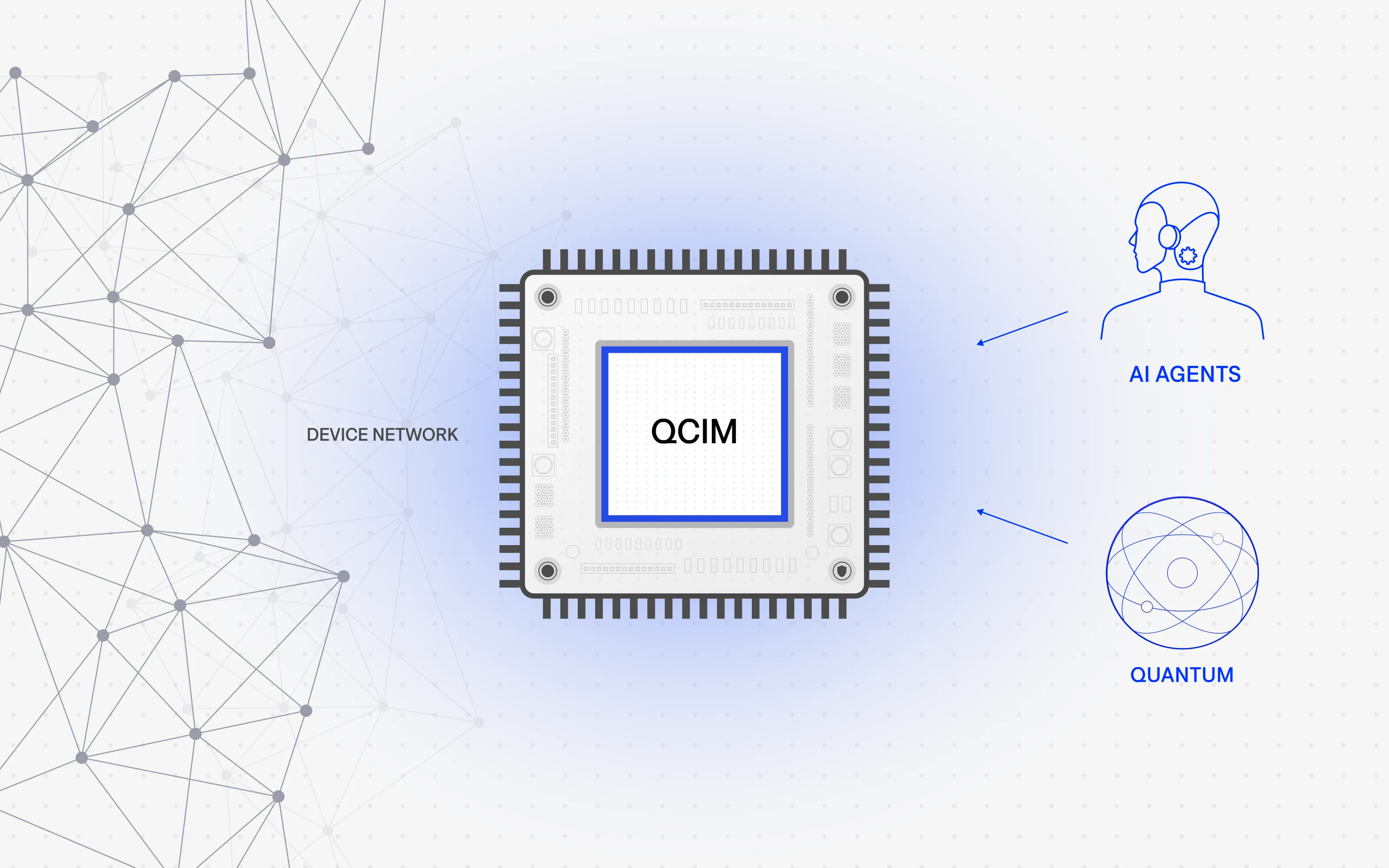
A chip at the center of a device network receiving unfamiliar connection requests from AI agents and quantum computers
Quantum Computing

Quantum computers will soon be able to break the encryption schemes used for all internet traffic, and most wireless communication. This means the only way to communicate securely is to use Post-Quantum Cryptography: encryption schemes that resist quantum computing attacks.

Artificial Intelligence

AI is powering unprecedented new cyber attacks. The question is no longer how to fix every vulnerability before an attack, but how to best adapt in a world where AI-powered attacks can and will find vulnerabilities in anything. At the same time, devices designed for human users will have their reliability challenged by AI agents acting as their users and administrators.

The solution is adaptable hardware.

QCIM Engine

One engine for all algorithms. Zero silicon redesigns. No performance compromise.

Traditional cryptographic hardware dedicates separate circuitry to different algorithms. As standards change, adding new capabilities consumes more silicon area and can require a hardware redesign.

QCIM replaces that model with a shared Compute-in-Memory architecture that executes firmware-updateable cryptographic kernels. The hardware foundation stays while its cryptographic capabilities evolve.

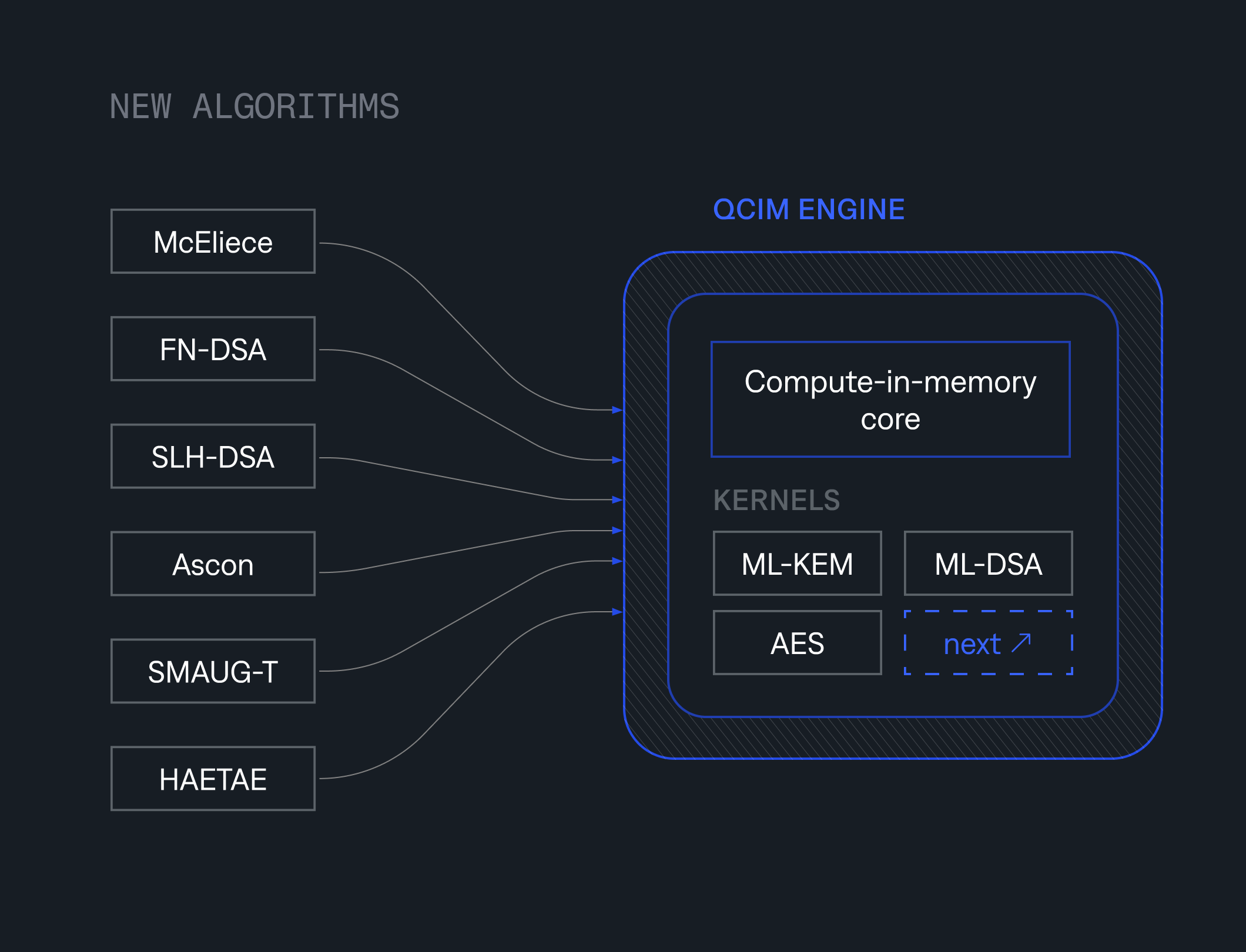
Diagram: new algorithms such as McEliece, FN-DSA, SLH-DSA, Ascon, SMAUG-T and HAETAE all run on the QCIM Engine's compute-in-memory core as kernels
01

Crypto agile, enabling new algorithms.

02

Minimal silicon footprint.

03

Side-channel secure.

04

Competitive performance.

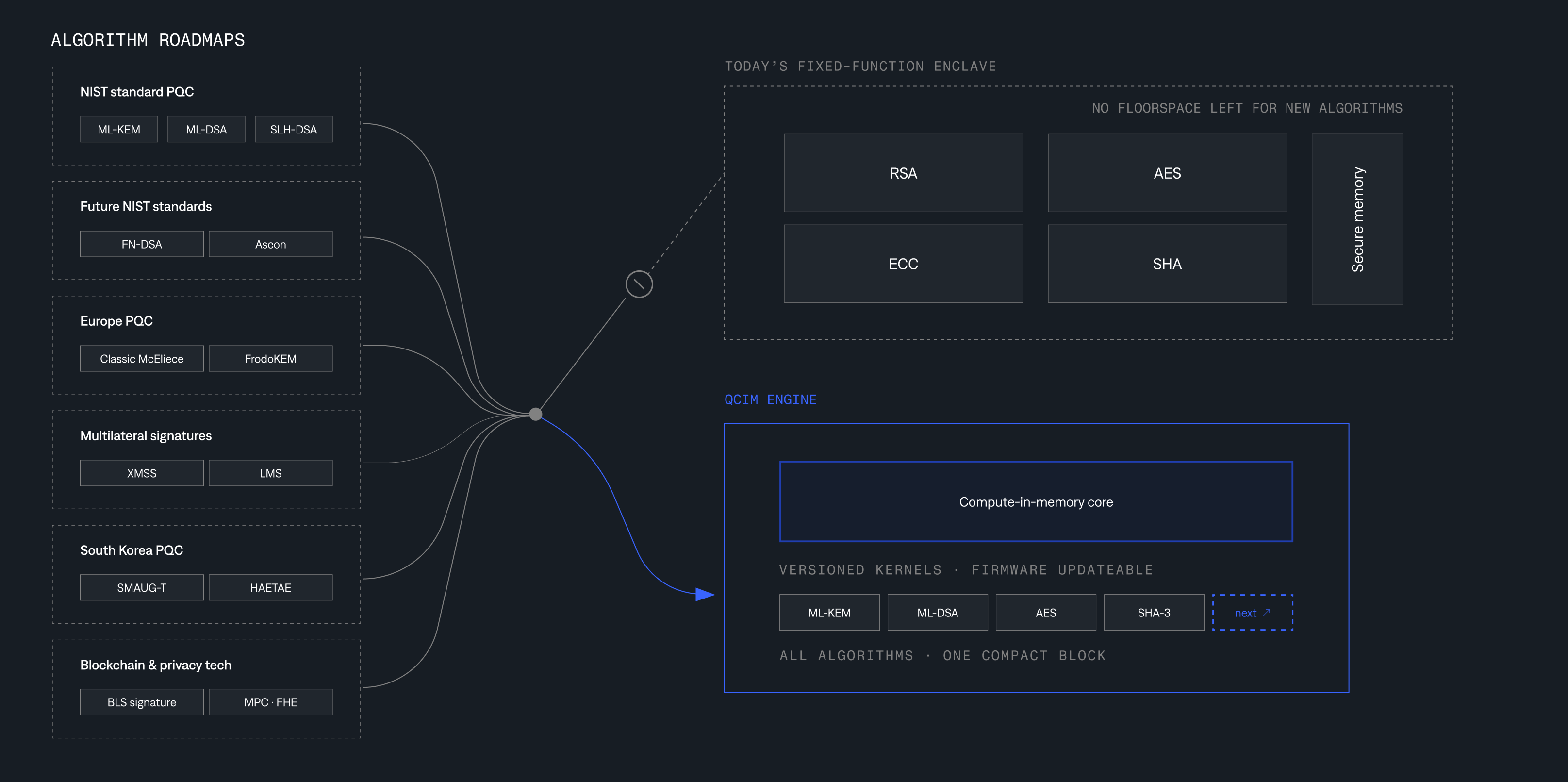
Standards will keep evolving. Fixed-function silicon cannot.

NIST PQC is one of many algorithm roadmaps devices must adapt to over the next decade. A conventional enclave has to spend new floorspace on each one, and eventually runs out. QCIM runs them as versioned kernels on the same core.

Products

Explore our trusted silicon solutions.

Three products, one stack. QCIM Engine is adaptable cryptographic compute, QCIM RoT is adaptable hardware trust, and QCIM Platform Security is security management throughout the device lifecycle. The Engine executes the cryptography, the Root of Trust establishes device trust, and the Platform maintains that trust after deployment.

Evaluate QCIM for your architecture.

Request a trial. Request technical specifications, evaluation IP, or a consultation with our hardware security team.

Contact us →